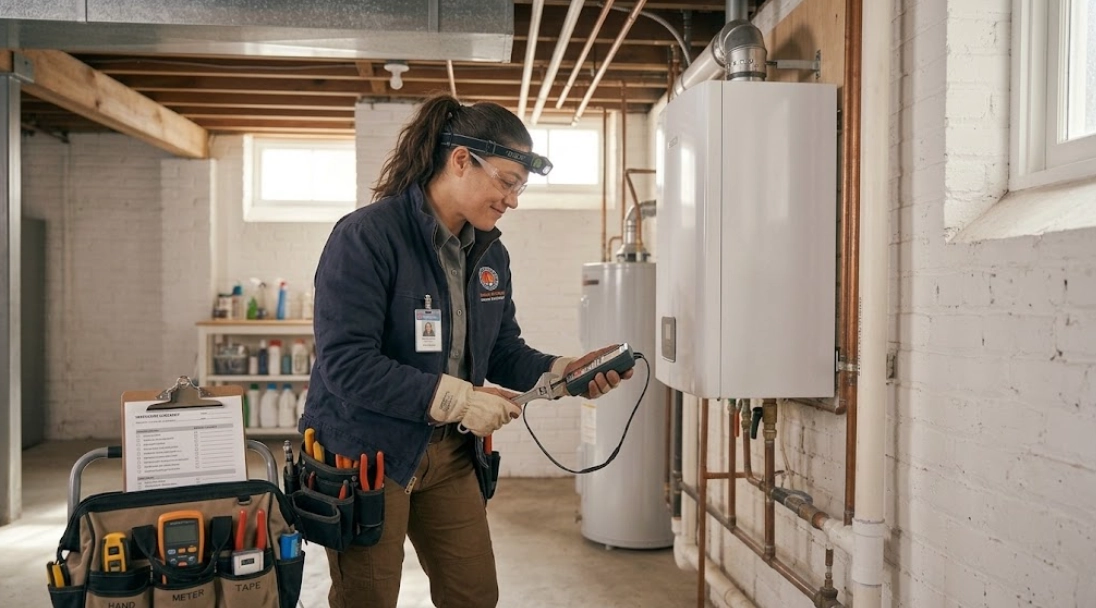
When outdoor temperatures plummet across Queens, a dependable boiler is essential for the comfort and safety of your household or rental property. Whether you own a pre-war row house near Jamaica Avenue, a two-family property along Hillside Avenue, or a multi-family building near Jamaica Station, heating failures demand prompt, accurate mechanical diagnosis. At NY Plumbing, our diagnostic approach focuses on identifying the true root cause of equipment malfunctions rather than applying temporary surface fixes.
Common Boiler Problems in Residential & Multi-Family Properties
Residential heating systems in Jamaica face substantial operational demands through the harsh winter months. Over time, cycling fatigue, mineral scale accumulation, and electrical switch degradation cause system failures. Homeowners and property managers frequently encounter several distinct malfunctions:
- Burner Ignition Lockouts: Modern gas control modules shut down burner operation when ignition cannot be confirmed within a predetermined sequence of seconds. Faulty hot-surface igniters, clogged pilot orifices, or corroded flame sensors commonly trigger lockouts.
- Pressure Control Imbalances: Low-pressure steam systems rely on delicate pressuretrol switches set between 0.5 and 2.0 PSI. When pigtail siphons clog with soot and rust, pressure readings distort, causing premature burner shutoffs.
- Circulator Pump Failures: In forced hot-water hydronic systems, failing motor bearings, seized impellers, or degraded internal capacitors prevent warm water from reaching baseboards across upper floors.
- Low-Water Cutoff Malfunctions: Both float-type and probe-style low-water cutoffs protect cast-iron vessels from dry-firing. Sediment build-up inside the float chamber causes false shutdowns, leaving homes without heat.
- Dripping Relief Valves: When thermal expansion tanks become waterlogged or fill valves fail to shut off, boiler internal pressure surpasses 30 PSI, forcing safety relief valves to discharge onto the basement floor.
When property owners encounter a no heat boiler repair Jamaica Queens emergency, immediate troubleshooting ensures pipes do not freeze and interior living spaces stay protected.
Steam Boilers vs. Hot Water Hydronic Boilers
A proper diagnosis requires understanding the fundamental mechanical difference between steam and hydronic systems. In older Jamaica neighborhoods, cast-iron steam systems and circulating hot-water boilers behave under entirely different operating laws:
Steam Heating Systems: A steam boiler boils water inside its vessel to generate vapor, which naturally rises through vertical piping risers into cast-iron radiators under slight positive pressure. Radiators displace trapped room air through thermostatic air vents. As steam releases its latent heat into living spaces, it condenses back into liquid water and returns through gravity return piping to the boiler vessel. If you are experiencing knocking or cold rooms, professional radiator repair in Jamaica restores correct piping pitch and venting balance.
Hot Water Hydronic Systems: Closed-loop hydronic boilers heat water to approximately 160°F–180°F without boiling. Motorized circulator pumps force this water through copper or PEX tubing into finned baseboard convectors or radiant floor loops before returning it back to the heat exchanger. These systems operate under a constant 12 to 15 PSI of static water pressure.
Technicians handling steam boiler repair Jamaica Queens inspect water sight glasses, skim taps, and low-water cutoffs, while those addressing hot water boiler repair Jamaica Queens focus on expansion tanks, zone valves, air purgers, and pump relays.
Boiler Not Firing or Radiators Staying Cold?
Speak directly with an experienced technician who understands both classic steam piping and modern hydronic heating plants.
Key Warning Signs That Your Boiler Needs Professional Attention
Boilers rarely break down without prior warning symptoms. Paying attention to subtle early indicators allows you to schedule repairs before dealing with a total system outage in freezing weather:
- Rapid Short Cycling: The burner fires up for two minutes, shuts off abruptly, and starts again several minutes later. This indicates improper pressure settings, blocked chimney draft switches, or oversized equipment.
- Loud Kettling or Clanging Sounds: A rumbling sound resembling a boiling tea kettle indicates mineral scale encrusting the internal heat exchanger, creating localized steam pockets that vibrate violently against the cast iron.
- Water Accumulation Around the Base: Pooling water near the boiler foundation indicates failing pipe unions, cracked circulator gaskets, or an active leak in the pressure relief valve discharge pipe.
- Yellow or Flickering Burner Flames: A natural gas flame should burn crisp and blue. A lazy yellow flame suggests incomplete combustion, dirty burner ports, or carbon monoxide accumulation.
- Unsteady Water Line in Sight Glass: In steam systems, water violently surging up and down the glass gauge reveals oil, sediment, or chemical contamination on the water surface requiring skimming.
If your boiler not working Jamaica Queens diagnostic shows repetitive electrical tripping or burner lockouts, prompt inspection restores safe heat.
Jamaica Housing Context: Aging Infrastructure & Heating Demands
Jamaica, Queens is characterized by an architectural mix of century-old single-family detached colonials, two-to-six-family masonry residences, and mid-rise apartment buildings. From residential streets bordering Rufus King Park and Jamaica Center to neighborhoods near South Jamaica and Hollis, heating plants operate under specific structural conditions:
Many multi-family buildings utilize shared vertical steam risers running through stacked bathrooms and bedrooms. Decades of structural settling in older foundations can alter pipe pitch, trapping condensate inside horizontal mains beneath the floorboards. In addition, older chimneys may suffer from mortar deterioration or inadequate draft velocity when modern equipment is vented into oversized brick flues. Understanding these localized building nuances enables our technicians to quickly isolate whether a heating malfunction stems from the central boiler in the basement or distribution bottlenecks upstairs.
What Happens During a Boiler Diagnostic & Repair Visit
When a technician arrives at your property, diagnosis follows a thorough, structured procedure to ensure safe operation and accurate problem identification:
- Initial System Assessment: We inspect the physical installation, check thermostat calling signals, verify utility gas supply, and assess electrical supply voltage and emergency shutoff switch continuity.
- Safety & Limit Control Testing: The technician tests the low-water cutoff mechanism, verifies pressure relief valve integrity, checks chimney draft velocity, and tests roll-out and spill safety switches.
- Combustion & Ignition Evaluation: We evaluate the pilot assembly, electronic ignition module, gas regulator valve pressure, and burner flame characteristics.
- Hydronic or Steam Circuit Verification: For steam systems, we inspect sight glass levels, skimming ports, and air vents. For hydronic boilers, we evaluate system operating pressure, expansion tank charge, and motorized zone valve operation.
- Repairs & Operational Testing: Defective components are replaced with manufacturer-compatible parts. The boiler is then cycled through complete firing cycles while monitoring operating pressure and heat delivery across the building.
Repair vs. Replacement: Making a Practical Decision
Not every boiler malfunction warrants a complete system replacement. When individual mechanical components fail—such as an electronic ignition module, thermocouple, circulator pump, pressure gauge, or feed water valve—targeted component repair is by far the most cost-effective path.
However, when a cast-iron boiler vessel is more than 20 to 25 years old and develops a cracked heat exchanger section, repair is neither structurally safe nor economically practical. In those situations, exploring full boiler replacement in Jamaica delivers modern fuel efficiency, dependable winter operation, and full compliance with current New York City building and mechanical codes.
Factors Influencing Boiler Repair Complexity & Cost
Because every residential heating installation differs in age, fuel configuration, and piping layout, repair scope varies based on several objective factors:
- System Type: Single-pipe steam heating involves different diagnostic procedures, venting requirements, and specialized valves compared to multi-zone hydronic circulating systems.
- Component Availability: Older atmospheric boilers may require hard-to-source legacy burner trays or obsolete gas valves, whereas standard circulator pumps and universal controls are readily accessible.
- Piping Degradation: Severely corroded black-iron nipples or frozen brass shutoff valves often require repiping surrounding boiler trim rather than simple unthreading.
- Basement Accessibility: Cellar ceiling height, clearances around mechanical equipment, and electrical service panel locations influence job complexity.
Preventive Maintenance Advice for Queens Homeowners
Proactive maintenance protects heating equipment from premature wear and minimizes the risk of sudden mid-winter breakdowns. Homeowners should observe these seasonal practices:
- Weekly Blowdowns on Steam Cutoffs: Periodically flush float-type low-water cutoffs into a bucket until the water runs clear, clearing out rust and silt from the float chamber.
- Pre-Season Test Run: Fire up your heating system in early autumn before freezing weather sets in to confirm the burner ignites smoothly and all radiators heat up evenly.
- Inspect the Chimney Flue & Draft Hood: Check the metal flue pipe connecting your boiler to the chimney for rust, loose joints, or soot accumulation that could impede exhaust draft.
- Clear the Boiler Room: Maintain at least three feet of open clearance around the boiler. Never store combustible materials, cardboard boxes, or solvents near heating equipment.
Urgent Heating Problems & Mandatory Gas Safety Guidance
If you smell natural gas (a pungent rotten-egg sulfur odor) or suspect a gas leak: Immediately evacuate all occupants and pets from the building. Do not operate light switches, do not use cell phones indoors, and do not attempt to relight pilot flames. Once at a safe distance outside, call 911 or the gas utility emergency dispatch (National Grid or Con Edison) immediately. Never attempt to investigate or repair a gas leak yourself.
Related Residential Plumbing & Heating Services
In addition to central boiler repairs, our team provides comprehensive mechanical and plumbing support for property owners throughout eastern Queens:
Boiler Replacement
Accurate heat-loss sizing calculations, oil-to-gas conversions, and code-compliant installations when older heating plants reach the end of their operational lifespan.
Explore Replacement →Steam Heat & Radiator Repair
Eliminate knocking water hammer, balance sluggish radiators, and replace leaking angle valves and air vents across pre-war multi-family properties.
Radiator Services →Water Heater Repair
Troubleshoot no-hot-water emergencies, faulty thermocouples, leaking relief valves, and indirect domestic water storage tanks piped to boilers.
Water Heater Services →Gas Line Repair & Inspection
Certified pressure testing, gas piping repairs, appliance hookups, and professional guidance regarding NYC Local Law 152 periodic inspections.
Gas Line Inspection →Leak Detection
Acoustic and thermal diagnostics to pinpoint hidden water leaks inside walls, ceilings, and risers between stacked apartments without unnecessary wall damage.
Pinpoint Leaks →Drain Cleaning
Mechanical cable snaking and clog removal for grease-choked kitchen lines, bathroom traps, and slow branch drains in older homes.
Drain Clearing →Sewer Line Repair
High-definition video sewer camera inspections, root intrusion clearing, and structural repair for underground clay and cast-iron building sewer laterals.
Sewer Line Repair →Serving Jamaica, Queens and Surrounding Communities
Our heating technicians assist homeowners, landlords, and property managers across Jamaica and neighboring Queens communities. Whether you need boiler repair near Downtown Jamaica, prompt service for a two-family property requiring boiler repair near South Jamaica, or heating diagnostics for single-family homes near boiler repair near Hollis, we are ready to assist. Visit our Service Areas page for complete neighborhood details.
Frequently Asked Questions About Boiler Repair
Why is my boiler firing up but radiators remain lukewarm or cold?
In steam heating systems, this is usually caused by clogged radiator air vents, improper boiler water level, or an inaccurate pressuretrol setting that cuts burner cycles too early. In hot water hydronic setups, air trapped in baseboard loops, a defective circulator pump, or a stuck motorized zone valve commonly blocks heated water from circulating.
What causes repeated boiler lockouts during freezing Queens weather?
Lockouts are typically triggered by safety limits sensing hazardous operating conditions. Common causes include a dirty flame sensor, worn thermocouple, tripped spill switch due to inadequate chimney draft, or a low-water cutoff preventing dry-firing when water drops below minimum safety levels.
Can a leaking boiler section be repaired or does it need replacement?
If leaks originate from threaded pipe nipples, circulator flanges, relief valves, or external copper fittings, straightforward component replacement resolves the problem. However, internal cast-iron section cracks caused by thermal shock or age-related metal fatigue cannot safely be patched and require system replacement.
What should I check before calling for a boiler repair visit?
Confirm that your thermostat is set to heat and above room temperature, verify that the red emergency power switch at the cellar stairs is turned on, check that the sight glass on steam boilers shows water between one-half and two-thirds full, and ensure the gas shutoff valve handle is aligned with the gas pipe.